Organic earthy web design, the slow stack.
The 2015-onwards reaction to flat sterile design. Cream paper bases, moss and terracotta palettes, editorial serifs, hand-torn edges, biophilic touches, intentional negative space. A style guide for wellness, organic skincare, sustainability brands, slow-living publications, and the agency you are reading right now.
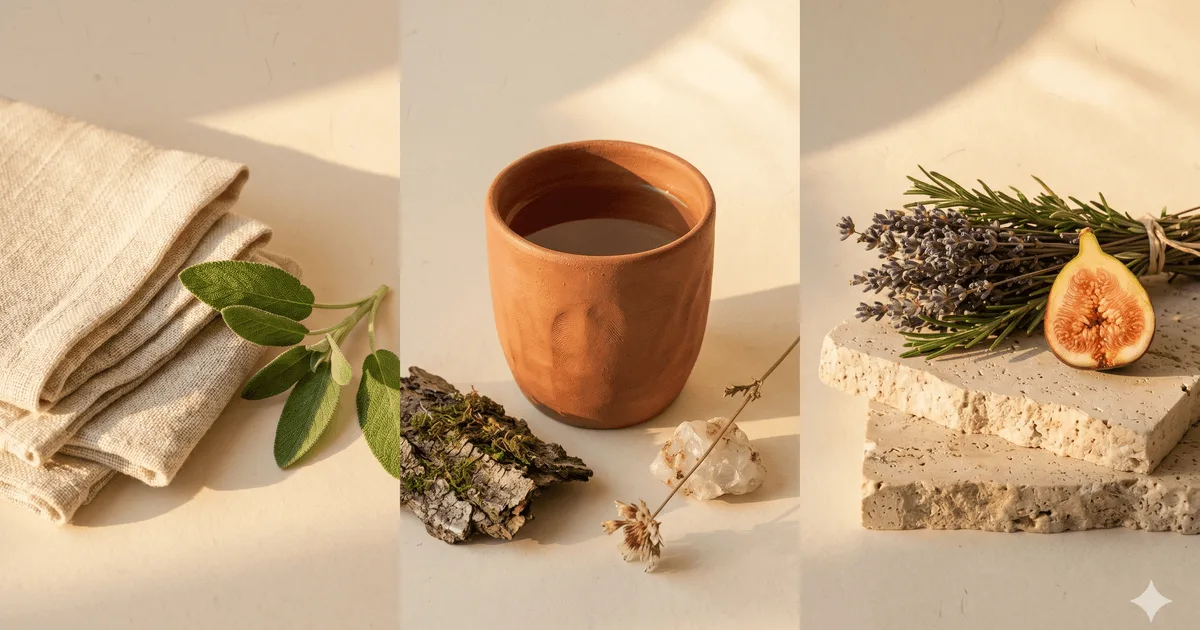
- Organic earthy web design = the slow-living visual language of patagonia.com, kinfolk.com, sezane.com; cream paper, moss palette, editorial serifs, biophilic touches, intentional negative space.
- Surfaced 2015 onwards as a DTC reaction to sterile flat design. Note: this is also Digital Heroes' own house style, so we live in it daily.
- Palette is cream paper, moss green, sage, terracotta, walnut, olive. Typography is humanist sans body, editorial serif display, mono utility used sparingly.
- Right for wellness, organic skincare, natural food, sustainability, indie ceramics, slow-living publications, agencies that lean editorial.
- Wrong for SaaS dashboards (too soft), Gen-Z urgency fashion (too quiet), urgent-CTA funnels (slow tone hurts conversion velocity).
The slow-living visual language of sustainability brands.
Organic earthy web design is the slow-living visual language of patagonia.com, kinfolk.com, and sezane.com. It is defined by cream paper bases, moss and sage and terracotta palettes, editorial serifs paired with humanist sans, hand-torn or hand-drawn elements, intentional negative space, and biophilic touches (leaves, stones, ceramics, raw linen). The aesthetic signals craft, care, and a deliberately unhurried commercial tempo.
The style surfaced around 2015 as a direct-to-consumer reaction to the sterile flat-design wave that dominated the early 2010s web. Slow-living publications were doing the editorial heavy lifting: Kinfolk magazine launched in 2011 and by 2015 had codified what an unhurried editorial layout could look like on the web. The DTC wave followed: Our Place, Daughter Co, Sézane, and a cohort of small brands wanted the same tactile warmth on their own storefronts. The aesthetic also borrowed openly from biophilic design principles: the architectural movement arguing humans respond positively to natural materials, plant life, and daylight inside built environments.
A note on bias: this is also Digital Heroes' own house style. The page you are reading right now is built in it. Cream background, moss accent, italic Instrument Serif, editorial spacing. We did not invent the style; we adopted it from the brands above because it does positioning work no purely functional UI does. When the site says "calm, considered, agency-led," the visual stack agrees before a sentence is read. That said, it is not universal. Half of this page is about when the style is wrong.
Six live sites running the slow stack.
The fastest way to internalise the style is to spend an hour on the sites that shaped it. The six below cover the full vocabulary: outdoor sustainability anchor, French fashion warmth, Australian craft, modern kitchen DTC, slow-living publication, and indie ceramics studio. Open them on a desktop. Notice the cream paper, the editorial line breaks, the absence of carousels.
- patagonia.com · the sustainability anchor. Editorial product pages built like field reports, type that reads as outdoor catalogue, palette pulled from rocks and granite. Sets the reference for any brand whose story involves real outdoor use rather than aesthetics-only.
- sezane.com · the Parisian DTC fashion brand that pulled earthy palettes into mainstream fashion ecommerce. Editorial photography, generous gutters, restrained product grids. The lookbook layout the entire small-batch fashion category quietly copied.
- fromourplace.com · the Always Pan brand. Cream backgrounds, terracotta and sage product photography, hand-drawn illustration accents, editorial product copy. A modern kitchen storyteller masquerading as a cookware company.
- daughter-co.com · an Australian ceramics studio. Single-product pages, raw linen backdrops, indie-zine type. The reference for any small craft brand that does not need every page to scream.
- kinfolk.com · the slow-living publication that codified the editorial side. Long-form articles, fine type, considered photography, near-zero ornament. The grammar book for every site in this category.
- designboom · the long-running design publication that catalogues the wider biophilic and craft movement. Useful as a feed of brands experimenting with cream paper, raw textures, and natural materials in commercial layouts.
What none of them share: pure white backgrounds, neon accents, glassmorphism, 3D illustration, or carousel-stuffed homepages. The style is what is left after you remove every soft-tech convention.
Six swatches pulled from soil, leaf, and clay.
The palette is short and warm. Moss green carries brand identity. Sage softens. Terracotta sits as the single warm accent (one per viewport maximum). Cream replaces pure white as the canvas. Walnut is the ink, not pure black. Olive is the structural neutral. Notice no pure white and no pure black anywhere; the absence of either is what makes the palette feel like paper rather than screen.
| swatch | name | hex | role |
|---|---|---|---|
| Moss green | #6fa37a | brand primary | |
| Sage | #b5c4a0 | soft secondary | |
| Terracotta | #c2693d | single warm accent | |
| Cream paper | #f5f0e8 | canvas / surface | |
| Walnut | #4a2c1d | ink / display type | |
| Olive | #5d6b3a | structural neutral |
Notice the absence of pure black, pure white, neon, gradient blues, or saturated jewel tones. Organic earthy palettes either come from soil, leaf, and clay, or they are not earthy. The discipline is in what you refuse to add.
Three faces, all free on Google Fonts.
The typography pairing is short and warm. A humanist sans for body at 16-18px with generous line-height (Inter does the Söhne job for free). An editorial serif for display headings (Source Serif Pro pairs the closest to Tiempos Headline without licensing). A mono utility face used sparingly for captions and metadata. Three faces total. Anything more reads as indecision.
| role | typeface | weight / style | source |
|---|---|---|---|
| body | Inter | Regular 400 / Medium 500 | Google Fonts |
| display | Source Serif Pro | Regular 400 / Semibold 600 / Italic | Google Fonts |
| captions / mono | JetBrains Mono | Regular 400 | Google Fonts |
| body alt | Source Serif Pro | Regular 400 | Google Fonts |
Premium licensed faces (Söhne, Tiempos Headline, Editorial New) sharpen the result if the budget exists. The free pairing above gets you 85% of the way at zero typeface cost, which is usually enough for the brand to ship and decide whether to upgrade later.
When earthy is the right call. And when it backfires.
Organic earthy web design is a positioning move first and an aesthetic choice second. It works when the brand needs to read as calm, considered, natural, or sustainability-aligned. It actively damages brands that need to read as fast, urgent, or tightly engineered. Six archetypes where it fits, three where it does not.
Where earthy works.
- Wellness and skincare brands · the palette pre-sells "natural ingredients" before the ingredient list is read.
- Organic and natural-food brands · cream paper and editorial serifs read as farm rather than factory.
- Sustainability and regenerative agriculture · the aesthetic does positioning work the copy then confirms.
- Slow-living publications and editorial sites · the style is the genre signal.
- Indie ceramics and craft studios · tactile palette mirrors the handmade product.
- Agencies leaning editorial · the right vibe for a studio that wants to read as considered. Hi from us.
Where it actively damages the brand.
- Tech and SaaS dashboards · engineers expect tight gridded UI with high information density. Soft cream paper reads as un-serious for technical buyers.
- High-energy Gen-Z fashion · the entire pitch is urgency and saturation. Earthy palettes read as muted in that context, and "muted" is the opposite of the brief.
- Urgent-CTA-driven funnels · limited-time discount drops and flash sales. The calm tone hurts conversion velocity; visitors browse rather than buy.
The pattern: if the visitor needs to feel rushed, do not use this style. If they need to feel reassured, it is often the only style that does the job in one scroll.
The honest test: read your hero copy aloud. If it ends with "shop the drop" or "limited time," pick a higher-energy style. If it ends with "made carefully" or "designed to last," this is the right one.
One copy-paste prompt for Midjourney, Nano Banana, or v0.
The prompt below is tuned for image-generation models (Midjourney, Google Nano Banana via the Gemini Imagen line) and code-generation models (v0.dev, Claude Artifacts). It pins the constraints the style depends on: cream paper base, moss and terracotta palette, editorial serifs, hand-drawn elements, generous negative space, no neon, no 3D, no slick polish.
Paste it into your tool of choice. The default output will often lean too clean and too templated. The "no slick polish" closing line is what keeps it honest. If you want a fully editorial output (no commercial gloss at all), add "treat this as the cover of a slow-living publication, not a DTC storefront" at the end.
Generate an organic earthy web design landing page for a [BRAND NAME /
ONE-LINE DESCRIPTION] in the [WELLNESS / ORGANIC SKINCARE / NATURAL FOOD /
SUSTAINABILITY / INDIE CERAMICS / SLOW-LIVING PUBLICATION] category.

PALETTE (strict, pulled from soil, leaf, and clay):
- canvas: cream paper #f5f0e8 (replaces pure white)
- ink: warm walnut #4a2c1d (replaces pure black)
- brand primary: moss green #6fa37a
- soft secondary: sage #b5c4a0
- single warm accent (one per viewport max): terracotta #c2693d
- structural neutral: olive #5d6b3a
- NO neon, NO pure blue, NO saturated jewel tones, NO pure black, NO pure white

TYPOGRAPHY:
- body: Inter (or Sohne if licensed), regular 400, 16-18px, line-height 1.7
- display: Source Serif Pro (or Tiempos Headline if licensed), italic
  permitted on emphasis words only
- captions and metadata: JetBrains Mono, used very sparingly

LAYOUT RULES (hard constraints):
- generous negative space; let the page breathe
- editorial line breaks on hero copy; never break a hero line by accident
- hand-drawn or hand-torn paper-edge accents permitted (subtle, low contrast)
- film-grain overlay across the canvas (8-12% opacity max)
- biophilic flourishes welcome: a single ginkgo leaf, a stone, a ceramic
  vessel, a sprig of dried herbs (one per section maximum)
- NO 3D illustration, NO clay-render UI, NO neumorphism, NO glassmorphism
- buttons are calm rounded rectangles, moss-500 background, no glow or
  gradient, hover shifts to moss-600
- product or editorial photography uses warm daylight, raw linen or cream
  paper backdrops, never blown-out white studio sweeps

DELIVERABLE: a single self-contained HTML file with inline CSS. Calm tempo.
No autoplaying carousels, no scroll-jacking, no parallax beyond a single
gentle background drift.

Do not apply slick commercial polish. The result should read like a Sunday
morning, not a Friday afternoon launch promo.
Models trained on 2023+ design data lean toward saturated, gradient-heavy, polished output unless explicitly constrained. The "no slick polish" closing line is the single most load-bearing instruction in the entire prompt.
Five answers.
What is organic earthy web design?
Organic earthy web design is a 2015-onwards style built on cream paper backgrounds, moss-and-terracotta palettes, editorial serif typography, hand-drawn or hand-torn elements, generous negative space, and biophilic visual touches (leaves, stones, ceramics). It surfaced as a DTC reaction to flat sterile design and is closely associated with slow-living publications like Kinfolk and sustainability-led brands such as Patagonia, Sézane, Our Place, and Daughter Co. The aesthetic signals craft, care, and a slower commercial tempo.
Is earthy web design good for sustainability brands?
Yes, and it is one of the few styles where aesthetic and positioning reinforce each other on the first scroll. Earthy palettes signal natural materials before a word is read. Editorial serifs read as considered rather than templated. Generous negative space communicates that the brand is not in a hurry to sell. For sustainability, regenerative agriculture, organic skincare, and natural-food brands, this style does positioning work the copy then confirms rather than has to argue for. The risk is reading as twee — counter it with real metrics, named suppliers, and one operational claim per page.
What fonts work best for an earthy brand?
Three faces typically. A humanist sans for body (Inter, Söhne, or the Söhne-adjacent free Inter via Google Fonts) at 16-18px with generous line-height. An editorial serif for display headings — Source Serif Pro, Tiempos Headline, or Editorial New if budget allows. A mono utility face (JetBrains Mono or IBM Plex Mono) for captions and metadata, used very sparingly. The pairing rule is simple: one neutral workhorse, one serif with character, one mono with restraint. Anything more reads as indecision.
When is organic earthy design wrong for a brand?
Three categories where the calm tone actively hurts. First, tech and SaaS dashboards — engineers expect tight gridded UI with high information density, and earthy softness reads as un-serious. Second, high-energy Gen-Z fashion brands where the entire pitch is bright urgency. Third, urgent-CTA-driven funnels (limited-time discount drops, flash sales, conversion-led DTC promo pages) — the slow tempo of the aesthetic hurts conversion velocity. If the page's job is to make the visitor click within 8 seconds, pick a higher-energy style.
How is organic earthy different from Japandi minimalism?
Both are calm, both use natural palettes, both lean on negative space. The differences are climate and texture. Japandi is Scandinavian-Japanese fusion — colder white-and-oak base, cleaner geometry, more restrained ornamentation, monastic. Organic earthy is warmer cream-and-moss base, hand-torn paper edges, visible film grain, more biophilic flourish (a leaf, a stone, a ceramic vessel). Japandi feels like a tea ceremony. Organic earthy feels like a Sunday morning kitchen with sunlight on the table. Same family, different temperatures.
More from Ella.
Brand Designer · UK · London · 7 posts on the site
Published .