AOV lift
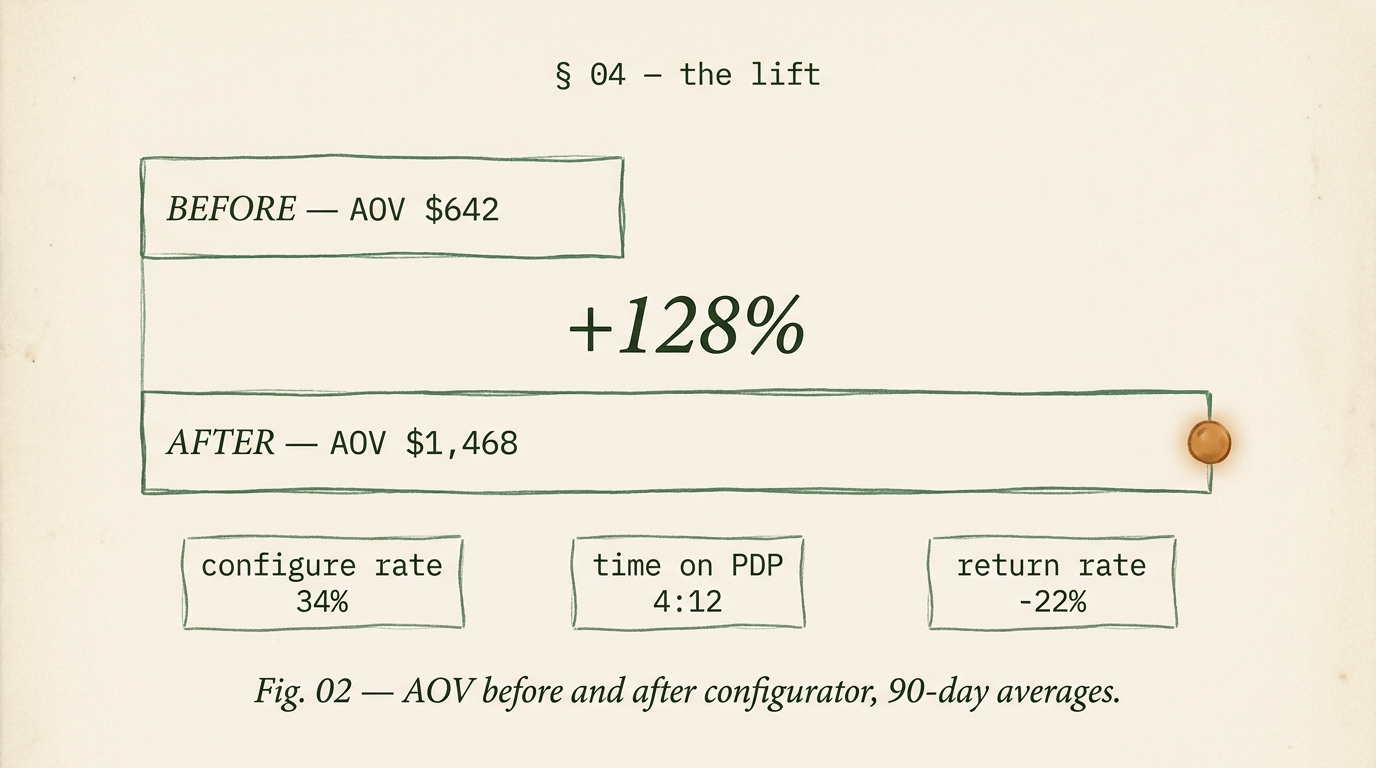
+128%
From $642 to $1,468 across 90-day rolling averages post-launch.
An archetype drawn from Shopify Hydrogen configurator work we have shipped for DTC furniture brands. Three-choice surface (fabric, dimension, finish), 90-day AOV lift from $642 to $1,468.
Three choices, not thirty. Fabric (seven options), dimension (three widths by two depths), finish (four wood tones). Built on Shopify Hydrogen with Remix routing, real-time pricing, and a lightweight visual preview that kept time-on-PDP above four minutes. AOV lift came from three places: higher base SKU configurations, add-on upsell at the configurator stage, and a return-rate drop because shoppers who configured deliberately did not return their choice.
From $642 to $1,468 across 90-day rolling averages post-launch.
Of PDP visitors engaged at least one choice. 78% of those completed all three. 41% added to cart.
Fewer returns on configured orders than stock SKUs. Intentionality moves the margin.
The founder arrived with a category mistake most furniture brands make: too many choices. The existing site offered 28 fabric swatches, 6 dimension variants, 9 leg finishes, and 4 back cushion options. Do the math and a single sofa had 6,048 possible configurations. Conversion rate was 0.9 percent. AOV sat at $642, only 8 percent above the base SKU price, which meant shoppers were picking the default in every dimension just to finish the journey.
The furniture business does not need more options to earn AOV. It needs fewer options and better visualization. We killed 21 of the 28 fabrics, 3 of the 6 dimensions, and 5 of the 9 leg finishes. Seven fabrics survived the cull: three neutrals, two muted colors, two structured textiles. Every remaining option was photographed by a single studio for consistency, so the fabric swatches on the site looked like the fabric shipped, in the same light.
The second shift was price surfacing. The old site buried the price at the bottom of a specification list. The new configurator surfaces running price at each choice, so shoppers see the upgrade cost live: "walnut finish +$120", "XL depth +$360". Transparent pricing increased rather than decreased AOV, because shoppers deciding deliberately upgraded more than shoppers deciding blindly.
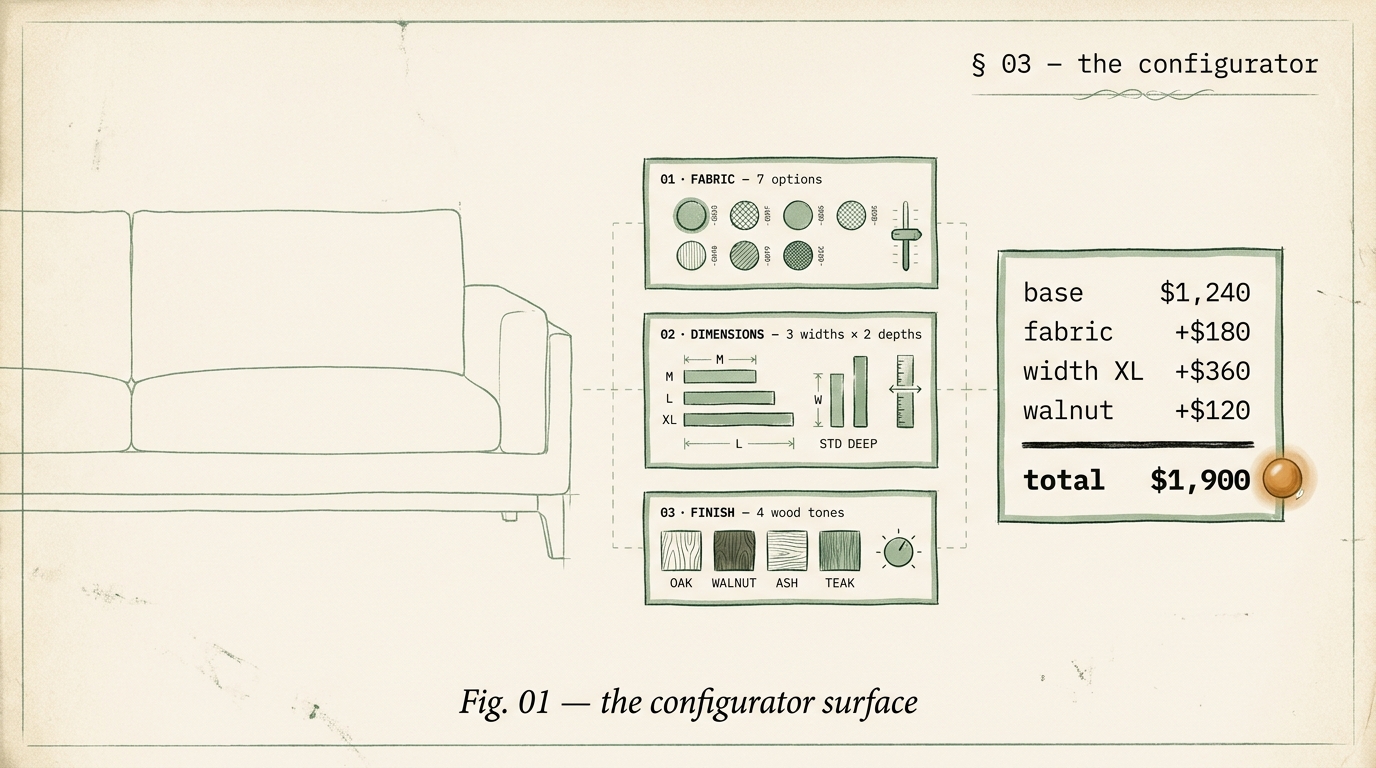
Seven swatches: three neutrals (ash, linen, stone), two muted (sage, ochre), two textured (boucle, wool). All shot in same studio light. Price delta visible on hover.
Three widths (78", 86", 102") by two depths (standard, deep-seat). Six combinations total. Each preview updates the on-screen silhouette.
Four wood tones (ash, oak, walnut, ebony). Each rendered on the leg preview with live color change. Final price lands before add-to-cart.
The configurator required interactivity that a block-theme Shopify storefront cannot deliver with acceptable performance. The choice was Hydrogen headless with Remix routing, or Liquid with heavy custom JavaScript. We picked Hydrogen because the state logic (fabric + dimension + finish + real-time price + cart mutation) lives cleanly in React, and Shopify's Storefront API makes per-variant pricing trivial.
"Cutting options felt terrifying. The AOV curve after launch argued the other way. Fewer, better choices earned more money."
Custom furniture, jewelry, apparel, gifting — wherever configuration exists, a three-choice surface usually beats a thirty-option dropdown. We scope the build in a two-week audit. Scoped quote in 48 hours.