signal 01 · AOV
$180+.
Home AOV compounds through sets and rooms. Below $120 means set mechanics are missing.
A home goods, decor, textiles, and kitchenware ecommerce practice that merchandises by room, not by category. Shopify Plus builds, AR visualization, oversized shipping logic, registry and wishlist mechanics.
Home buyers shop by room, not by category, and they return oversized items at a higher rate than any other DTC vertical. Run the brand against these five signals. Measured inside your Shopify, your Klaviyo, and your returns platform.
Home AOV compounds through sets and rooms. Below $120 means set mechanics are missing.
Shipping as share of revenue. Above 22% on oversized catalogs means parcel-split logic is broken.
Share of oversized SKUs with AR model enabled. Below 40% leaves conversion and return-rate gains on the table.
Share of sessions entering via room navigation versus category navigation. Low means the nav IA is wrong.
Overall return rate. Above 18% on home catalogs signals AR or size-description gaps.
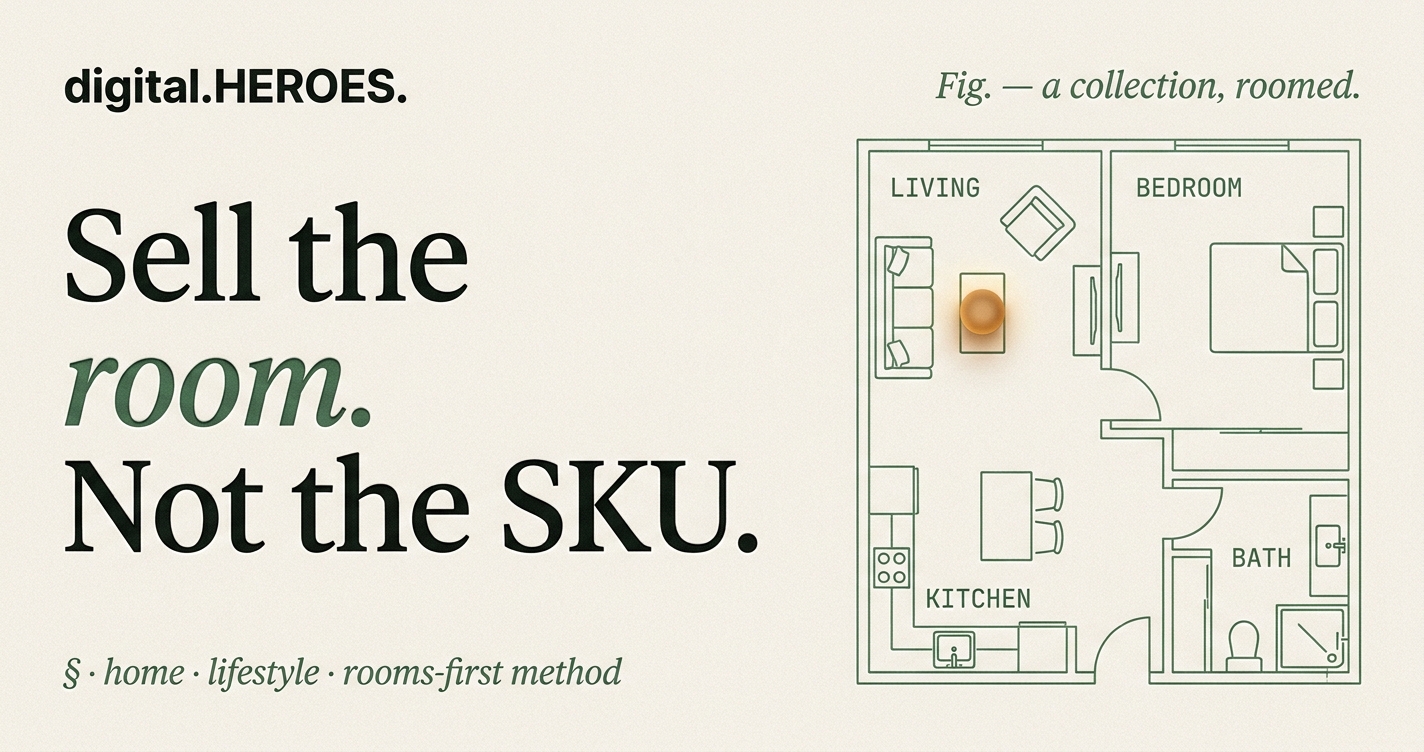
Home brands that lead with categories (bedding, lighting, rugs) force the buyer to context-switch across seven pages to fill a bedroom. Brands that lead with rooms keep the buyer inside the decision frame. AOV rises 18 to 32 percent on rooms-first navigation.
Sofas, rugs, lighting, art, storage, accessories. Longest browse session. Highest AOV.
Bedding, pillows, lighting, rugs, storage. Highest repeat rate as textiles wear.
Cookware, dinnerware, serveware, linens. Registry conversion peaks here.
Towels, linens, planters, outdoor textiles. Seasonal swing the strongest.
The biggest conversion killer in home is scale uncertainty. A rug looks wrong, a lamp lands too tall, a sofa occupies the whole wall. Shopify AR and model-viewer solve the scale question at the PDP. Conversion rises 18 to 26 percent; return rate on oversized items drops 28 to 40 percent.
USDZ for iOS, GLB for Android and web. Commissioned from 3D scans or engineered renders. Keep under 5MB per model for web delivery.
Shopify AR via Shopify Admin API. One-tap in-room placement. Works without an app install.
Buyer saves the AR view to their account. Klaviyo flow triggers 48 hours later with "still deciding?" and cross-room completions.
Every SKU above a footprint or height threshold gets AR on the PDP. Smaller accessories skip it. ROI concentrates where scale matters.
A well-run home brand runs shipping under 14 percent of revenue. A poorly run one burns 22 percent or more. Three levers solve it.
Metafield per SKU: parcel, oversized parcel, LTL, white-glove. Cart reads from there. Carrier routing follows.
Order with 3 parcel + 1 oversized splits into 2 shipments. Buyer pays parcel rate on parcel, LTL rate on oversized. No blended overcharge.
Free shipping minimums vary by zone. $120 zones 1-4, $180 zones 5-8. AOV climbs 14-22% without margin loss.
Wedding, housewarming, and gift registries are the cheapest conversion engine home brands skip. Gift buyers fulfilling someone else's list convert at 45-65 percent versus 2-4 percent DTC baseline. The messaging, flows, and fulfilment for the two buyer types need to be different.
Registry owner curates list. Shareable URL. Progress bar. Auto-removed when purchased. Personal message capture for gifters.
Owner: reminder to update, fulfilment notifications. Gifter: receipt, note confirmation, cross-gift recommendation.
Upsell at cart. Handwritten-style note. Separate ship address. Priced honestly because it costs the brand real money.
After wedding or event, registry owner gets 10% off remaining items. Industry standard. Converts 30-40% of leftover list.
Five layers. Room navigation, set bundling, AR visualization, shipping logic, registry.
Primary nav is rooms. Category filtering sits inside each room. Buyer stays in the decision frame.
Starter sets, room kits, complete-the-look. AOV rises through curation, not discount.
Shopify AR on every SKU above a size threshold. Return rate on large items drops 28-40%.
Parcel-split, oversized routing, threshold free shipping by zone. Margin recovery 5-9 points.
Wedding, housewarming, gift flows. Registry converts 2-3x DTC baseline.
Stack: Shopify Plus, Klaviyo, Okendo, Gorgias, Attentive, Shopify AR. Scoped quote within 48 hours.
Rooms-first audit, AR readiness, shipping math, registry review, 90-day roadmap.
Shopify Plus build: room nav, set bundling, AR viz, shipping logic, registry engine.
Shopify AR, model-viewer, 3D asset pipeline, PDP integration. Retrofit on existing store.
Dedicated pod: Shopify, AR ops, Klaviyo, wholesale + registry, CRO, ongoing ops.
A home goods ecommerce agency builds and runs the operating stack for a home, lifestyle, decor, textiles, or kitchenware brand selling direct to consumer. That means Shopify or Shopify Plus storefront engineering, rooms-first merchandising and navigation, AR visualization via Shopify AR or model-viewer, set bundling and complete-the-look upsells, oversized and parcel-split shipping logic, registry and wishlist mechanics for wedding and housewarming flows, Klaviyo retention tuned to home-goods purchase windows, and wholesale portal integration for brands selling to design trade and retail.
Our five-layer operating model for DTC home brands. Room navigation first because buyers shop by space, not by category. Set bundling second because AOV rises through curation. AR visualization third because return rate on large items drops 28 to 40 percent with in-room placement. Shipping logic fourth because oversized and multi-parcel routing is where margin leaks. Registry and wishlist fifth because gift conversion is 2 to 3 times DTC baseline. Bottom-up because a brand merchandised by category with an oversized shipping blind spot will never compound.
Pricing is scoped to engagement shape. Home brand audit: 2 weeks. Rooms-First Method build on Shopify Plus: 10-14 weeks. AR and visualization engagement: 4-6 weeks. Full home-brand partnership: 12 months with a dedicated pod. Book a 30-minute call and we send a scoped quote within 48 hours. Scope moves price, not the conversation.
Shopify AR uses the USDZ and GLB model formats natively via the model-viewer web component. We commission 3D scans or renders for your SKU catalog, optimise them for web delivery under 5MB per model, and embed them on the PDP with a one-tap in-room placement button on iOS and Android. Return rate on items above a size threshold drops 28 to 40 percent; conversion rises 18 to 26 percent on SKUs with AR enabled versus the same SKU without. The upfront cost of 3D asset creation pays back inside six months for most home brands.
Three layers. First, per-SKU shipping class stored as a metafield: parcel, oversized parcel, LTL freight, or white-glove. Second, cart logic that splits an order into multiple shipments when items cross classes so the buyer does not pay LTL rates on a parcel item. Third, threshold free shipping by zone so the AOV math actually works for the brand. We integrate ShipStation, Shippo, or direct carrier APIs and layer specialty freight brokers like uShip or XPO for LTL lanes. Margin recovery on shipping typically runs 5 to 9 points of revenue.
Yes. Registry is a distinct conversion engine for home brands. Wedding, housewarming, baby, and gift registries let a buyer curate a list that others can purchase from. Gift conversion on registry items runs 45 to 65 percent versus standard DTC. We build registry functionality natively on Shopify through apps like Giftnote, Gift Ship, or a custom integration, layered with Klaviyo flows for the registry owner and separate flows for the gifter. The two buyer types need different messaging.
Navigation primary is rooms: living, bedroom, kitchen, bath, outdoor, office. Category filtering sits inside each room. A buyer shopping for a bedroom sees bedding, lighting, rugs, art, storage, accessories in one place. The complete-the-look upsell fires within the room context rather than a generic related products shelf. AOV rises 18 to 32 percent on rooms-first navigation versus category-first, measured across home brands we have rebuilt.
Three triggers. First, catalog size: over 300 SKUs with multi-variant rooms and configurations hits standard Shopify theme limits. Second, wholesale: design trade and retail portal only runs cleanly at Plus. Third, international: Shopify Markets and Markets Pro with per-region pricing and compliance are simpler at Plus. We run the fit assessment against those three triggers on the intro call, not against revenue alone.
30-minute call. Litmus test on your numbers. Scoped quote within 48 hours.